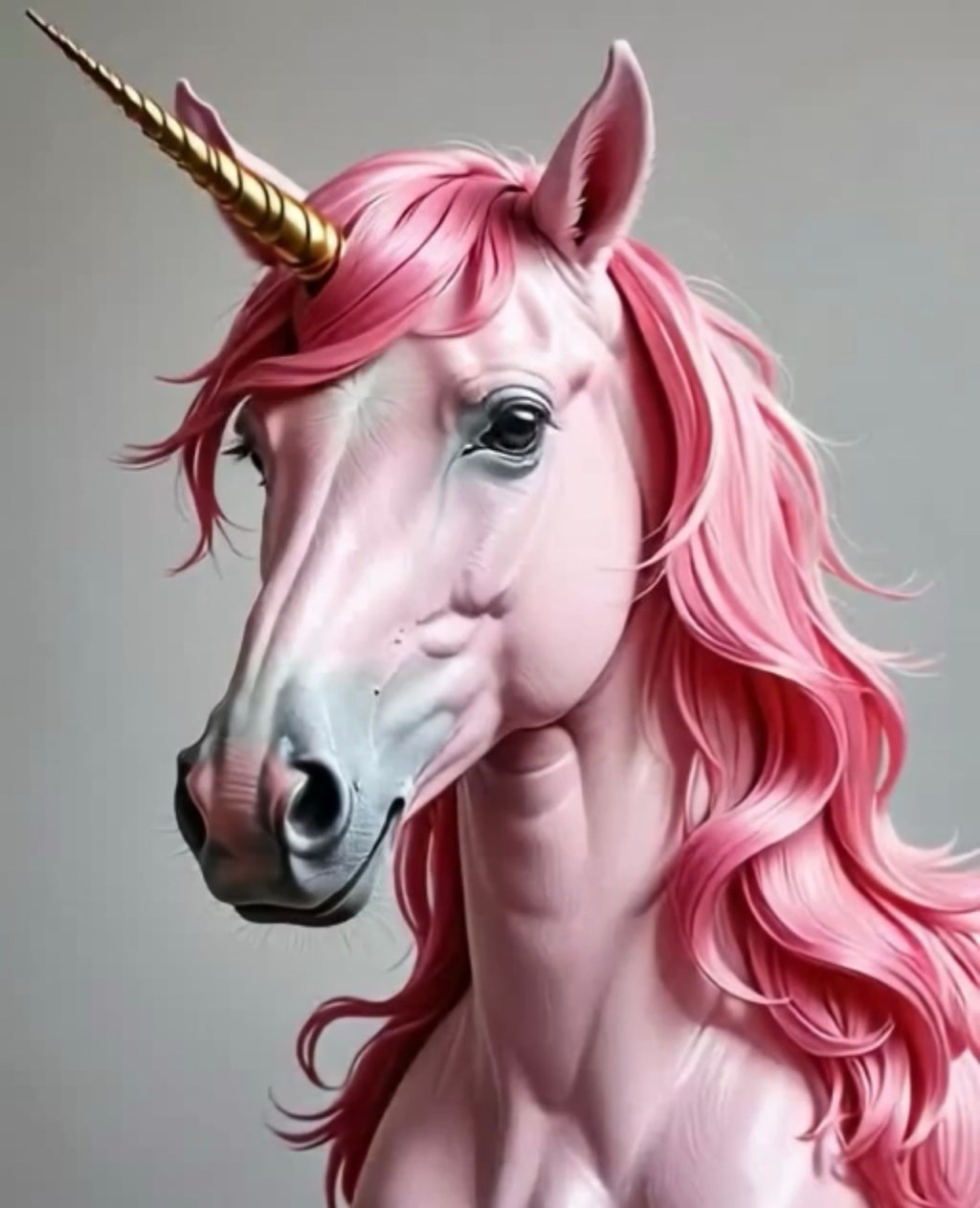
Does thinking about your art process interfere with that process?
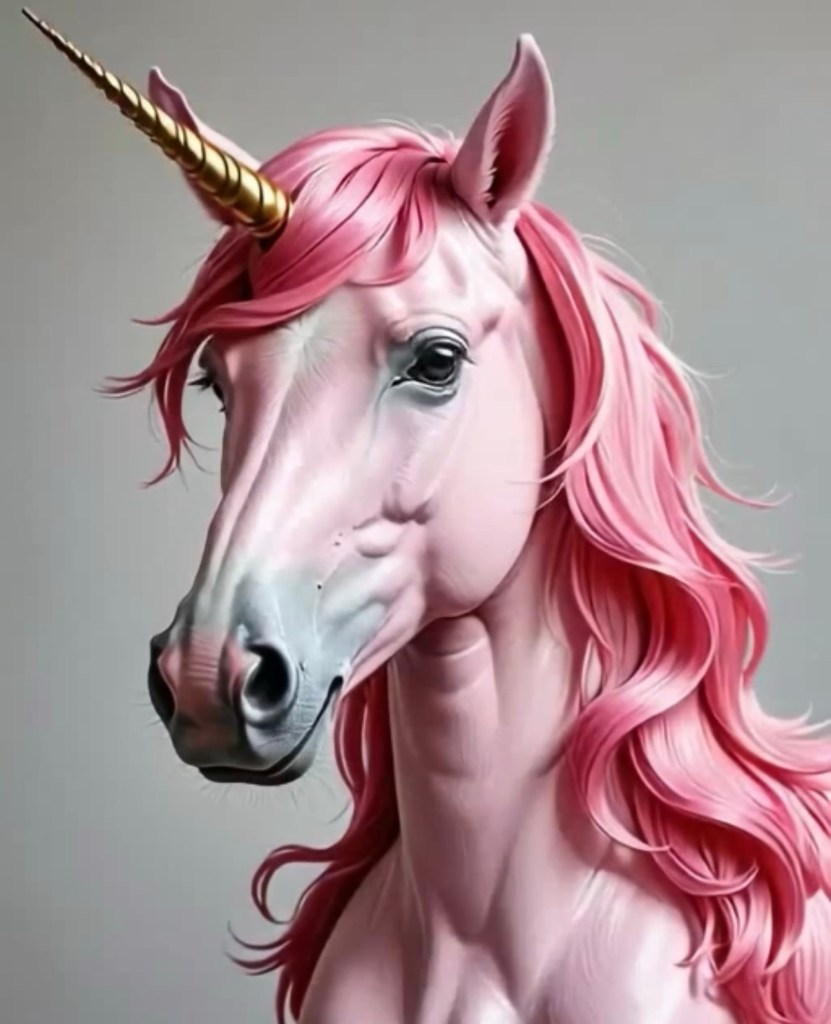
…Maybe, but its always facinating to understand why… Like a reveal…
Do artists really love to talk about their process? You’d think so; it’s de rigueur in art academia and the white cube blurb. We dissect it, analyse it, share it on social media, and sometimes spend more time thinking about making art than actually making it. Well, obviously, I do…
Here is the thorny question that’s been nagging at me lately: Does all this mental meta-work help or hurt our creative output?
The answer isn’t simple, and that’s what makes it fascinating.
Think about a centipede walking. It moves flawlessly until someone asks it how it coordinates all those legs. Suddenly aware of its own movement, it stumbles.
The centipede’s dilemma, the paradox of how self-consciousness can disrupt natural flow.
A centipede was happy – quite!
Until a toad in fun said, “Pray, which leg moves after which?
This raised her doubts to such a pitch,
She fell exhausted in the ditch…
The same thing happens to artists. You’re in the middle of something good, lost in the zone, when suddenly you think “Wow, I’m really in the zone right now!” And just like that – poof – the magic vanishes.
Your artistic movements become stiff, your decisions calculated rather than intuitive.
But here’s where it gets interesting: Unlike the centipede (or exploding Pink Unicorns), we’re not just creatures of instinct. We’re thinking beings who can learn and improve through reflection. Some understanding of our process might indeed be essential for growth.
The key might lay in timing…
There’s a time to think and a time to create. When you’re in the middle of making something, thinking too much about your process is like trying to edit a sentence while you’re still writing it. It interrupts the flow, makes everything feel mechanical, and can lead to creative paralysis.
But between creative sessions, reflecting what worked and what didn’t, understanding your patterns, identifying your strengths and weaknesses, this is the stuff that helps you grow.
Back to the start of my MA when I began to think about game theory. It’s like a sports person watching performance footage. They don’t analyse their technique while doing it, they study it afterward to improve for next time.
Create with wanton abandon during creative sessions. Then, in the quiet moments between… reflect, learn, and plan.
Bloody Rebecca Fortnum, got me thinking now… fancy thinking on an MA…
So now I’m thinking about artistic process through the lens of game theory concepts, specifically Backward Induction and Super-Nash equilibrium.
The creative process can be viewed as a sequential game with multiple decision points, making it perfect for backward induction analysis, while super-Nash concepts could optimise strategies across multiple equilibria.
Backward Induction:
Starting from the end state (completed artwork), we can work backwards through the creative process. At each decision point, the artist, me, faced choices between conscious analysis and intuitive flow.
The game tree, looks something like this:
- Final Stage: Completion/Review
- Middle Stages: Active Creation
- Initial Stage: Planning/Conception
Using backward induction, overthinking during the middle stages (active creation) tends to lead to suboptimal outcomes, which game theorists would call dominated strategies. This explains why artists who get their knickers in a twist too much during creation often produce worse results than those who stay in flow, sometimes me but not so much lately… interesting..
Super-Nash Performance: The Super-Nash equilibrium in this context reveals that the optimal strategy isn’t a pure strategy (all analysis or all intuition), but rather a mixed strategy that varies by stage:
Planning Stage: High analysis acceptable
Creation Stage: Minimal analysis optimal
Review Stage: High analysis beneficial.
This creates what game theorists call a separating equilibrium different optimal strategies for different phases…
The key insight from this theoretical framework is that the optimal strategy involves switching between two distinct modes:
Flow mode during active creation (dominated by intuitive processing)
Analysis mode during planning and review (dominated by conscious processing)
In game theory terms, maybe I am achieving a super-Nash equilibrium by playing different strategies at different points in the sequential game.
The Trembling Hand: An interesting application of game theory here is the concept of the trembling hand where perfect execution of a strategy is impossible due to small errors. This explains why even knowing the optimal strategy (don’t overthink during creation), I might still sometimes fall into analysis paralysis. The trembling hand in this context is the inevitable self-awareness that occasionally disrupts flow.
So knowing this, the strategic implications are:
The optimal strategy involves creating Firewalls between analysis and creation phases
Time-boxing creative sessions to prevent analytical drift.
Establishing pre-commitment mechanisms to stay in flow state (leave me the fuck alone I’m in the studio, listening to absolute radio with no interuptions thank you!)
In conclusion, game theory provides a surprisingly useful framework for understanding my growing process. Backward induction reveals that analysis during creation is almost always a dominated strategy, while the Super-Nash concept tells me I am creating distinct modes for creation versus analysis.
I now think I know why TERF’s exsist I might eloborate later, but as I’m not sure I can do anything about it so it might be a waste of thought process…
So what if I apply this artistic metacognition to climate chaos management.
Just as I as an artist need to balance flow states with analytical reflection, climate management might require a similar dual-mode approach. Here’s how an art practice framework might map onto climate chaos management:
Flow State vs. Analysis Paralysis
Systems thinking reconises climate chaos management as a collection of interconnecting problems much like how an artist’s work comprises multiple interrelated elements. However, just an artist can become paralysed by over-analysis, climate action can become overwhelmed by the complexity of interconnected systems.
Timing of Reflection
Just as artists benefit from separating creation and analysis phases, adaptive management of climate chaos might need to take active measures and then stand back for periods of reflection and adjustment. This creates a rhythm of action and analysis that prevents decision paralysis while ensuring forward motion… a shame we are on a tight time schedule and have a ground rush…
Meta-Level Awareness
So, when I read governments climate stratergy, I reckon they are appliying systems thinking to climate choas… they believe it is a managable set of problem…
So climate crisis management, is similar to how I have described artistic metacognition. However, the key insight from artistic practice suggests that this systems awareness should be applied strategically, not constantly.
The Implementation Framework
Based on this parallel, I’d like to propose a climate management approach that mirrors effective artistic practice:
Action Phases: Focused implementation of climate initiatives without getting caught in analysis paralysis.
Reflection Phases: Dedicated periods for systemic review and strategy adjustment.
Integration Phases: Periods where learning is incorporated into new action plans.
Practical Applications
This framework suggests some specific approaches:
During action phases, create early warning systems and climate regulation and stick to it instead of it being a political football.
Using reflection phases to evaluate effectiveness and adjust strategies.
Maintaining a balance between immediate response and long-term planning.
The Metacognitive Advantage
Be flexible, not in political terms but avoid overcommintment of limited resources based on weak evidence …the stakes are high… The key insight from this analysis is that climate chaos management could benefit from the same kind of structured alternation between immersive action and reflective analysis that benefits an art practice.
This approach suggests a new way of thinking about climate management: not as a constant state of emergency response, but as a rhythmic alternation between focused action and strategic reflection, much like an artist moving between creation and critique phases. This could help prevent both analysis paralysis and reactive short-termism, two common problems in climate response planning.
Sometimes, we need to step back from the canvas to see the whole picture, but we also need to know when to stop analysing and start painting. In climate chaos management, this translates to knowing when to act decisively and when to step back for strategic reflection. In painting terms, I have strategically acquired a rather lovely bum to gel print onto my canvas, and believe me when I tell you I’m going to be in a hell of a flow state when I’m doing that work!
Things to read: (Some of this is propaganda, head-in-the-sand nonsense, to cheer you up!)
https://royalsocietypublishing.org/doi/10.1098/rstb.2011.0416
http://toolkit.climate.gov/adaptation
https://unfccc.int/topics/adaptation-and-resilience/the-big-picture/introduction
 Mx.D.P
Leave a comment