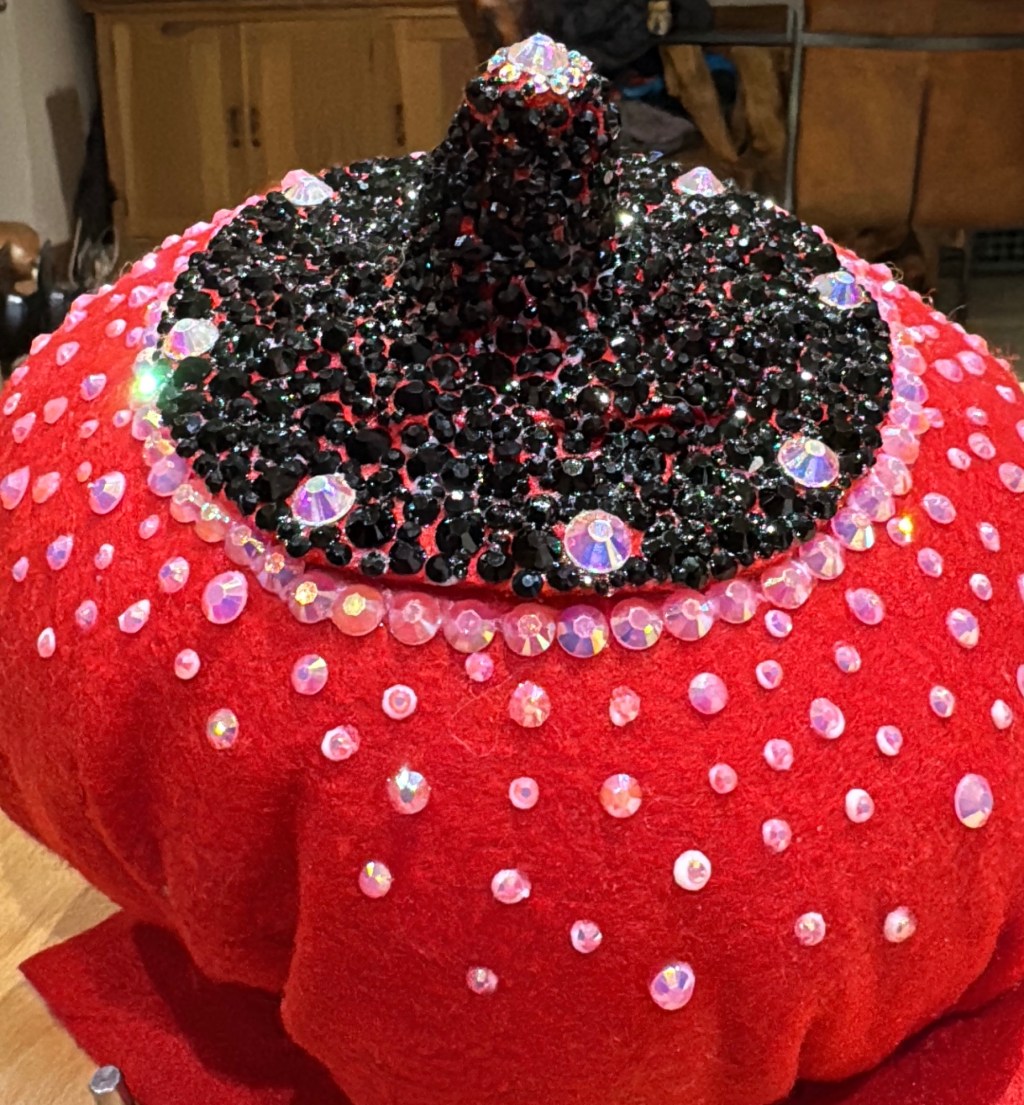
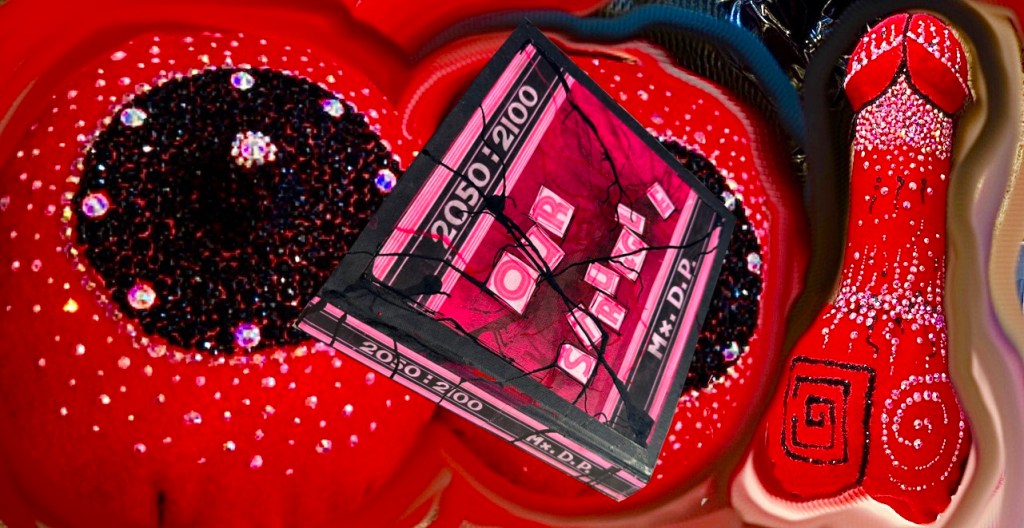
Well I never did find my sundress, but I did find a roll of red felt and thousands of rhinestones so the costume is coming along a treat!

Rhinestones, have become a staple in the worlds of fashion, costume design, and decorative arts. Yet, behind the sparkle lies a set of environmental concerns that no one thinks about.
Traditionally rhinestones were produced using glass. Historically, lead glass was used, but due to health concerns associated with lead, many manufacturers shifted to lead-free alternatives. Nevertheless, the production of glass itself is energy-intensive, requiring significant heat and raw materials such as silica sand, soda ash, and limestone. Each of these materials is extracted through mining processes that can degrade landscapes, disrupt ecosystems, and consume vast amounts of water.
Today’s cheap acrylic rhinestones are made from petrochemicals. After peak oil, remember that? The oil extracted is of poor quality these days; it’s sticky oil! No worries, the oil companies have got us hooked on plastic packerging, acrylic paints and craft materials, to use up and recomodify oil! The extraction and refinement of oil for plastic production are associated with greenhouse gas emissions, habitat destruction, and the potential for toxic spills. Further, the chemical processes necessary to convert these raw materials into acrylic polymers involve hazardous substances, raising concerns about air and water pollution at production sites.
Perhaps the most pressing environmental concern surrounding rhinestones lies in their persistence and potential to contribute to microplastic pollution. Acrylic rhinestones, when discarded, do not biodegrade. Instead, they fragment into smaller particles over time, entering waterways and, eventually, marine environments. These microplastics are ingested by aquatic life, with mounting evidence pointing to negative effects on physiological and reproductive health in a variety of species.
Even glass rhinestones, while technically inert, pose problems when disposed of improperly. Broken glass can harm wildlife directly, and the sheer volume of non-biodegradable waste adds to the growing challenge of landfill management.
The environmental impact of rhinestones cannot be divorced from the social context of their production. Many rhinestones are manufactured in regions with lax environmental regulations, where waste disposal and worker protection may be insufficient. Chemical runoff, inadequate waste management, and poor labour conditions have all been documented in areas with significant costume jewellery production.
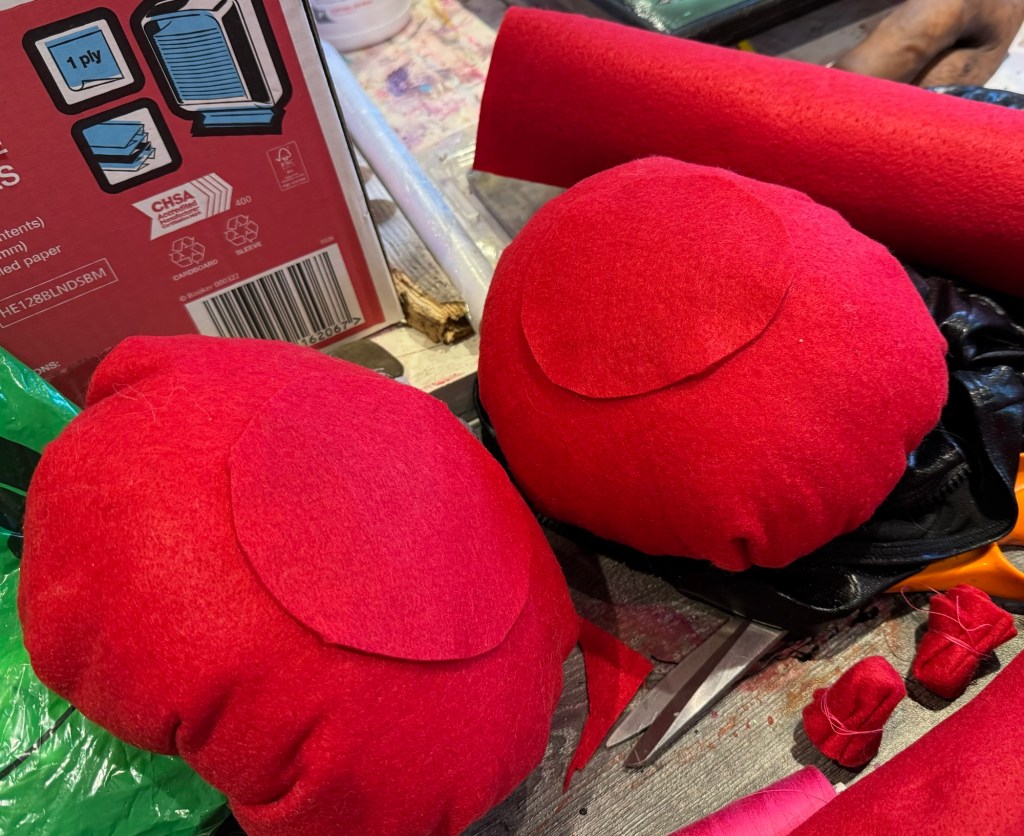
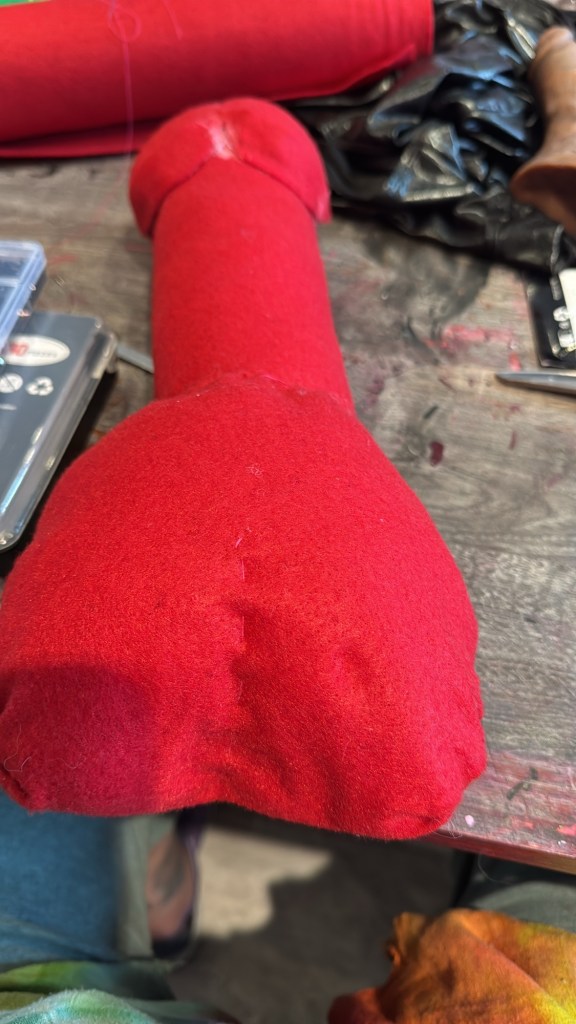
Several approaches have been proposed to mitigate the environmental footprint of rhinestones. Some designers have turned to recycled glass or bioplastics, although the latter’s real-world biodegradability remains contested. Others advocate for a reduction in single-use decorative items altogether, urging a shift towards more sustainable embellishments or the re-use of existing rhinestone products as in my costume.
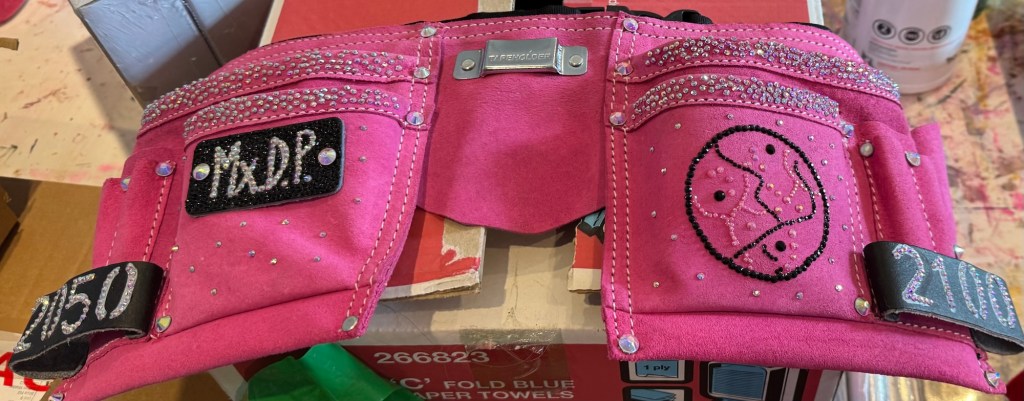
On an industry level, improvements in manufacturing efficiency, closed-loop recycling systems, and stricter oversight of chemical usage have the potential to reduce emissions and waste. Still, these measures are not yet widespread, and consumer demand for cheap, disposable fashion continues to drive unsustainable practices.
Rhinestones, bling and glamour, mask a complex web of environmental impacts. From the extraction of raw materials to the persistence of microplastics, their lifecycle is fraught with ecological challenges. Addressing these issues requires both systemic change within the fashion and manufacturing sectors and a re-evaluation of consumer habits.
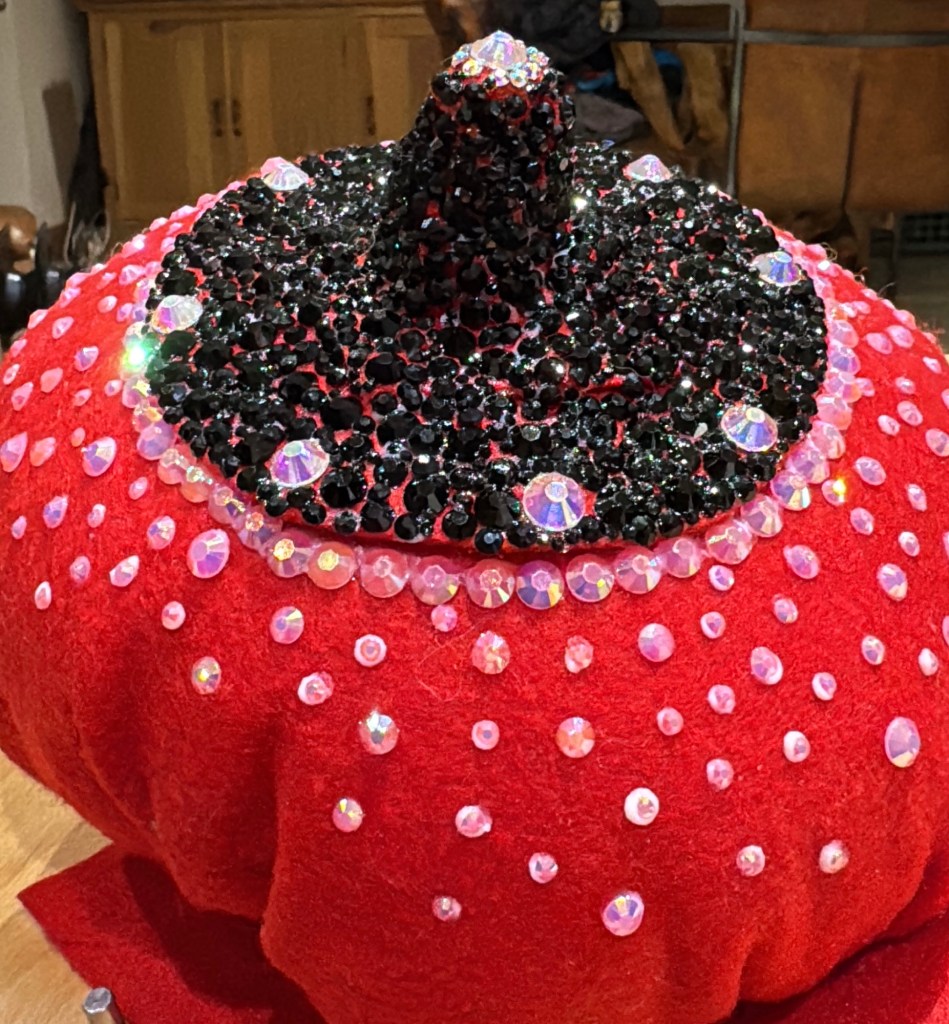
Still my boobs and dick look fab! it only cost the planet to make!!!
 Mx.D.P
Leave a comment