Digital arts are a living constellation of practices and creative technologies. At their core, they are art made with, through, or in response to digital technology or a hybridisation, a digital display of art. But that definition hardly does justice to the field’s restless energy and ability to absorb, reshape, and sometimes upend every tradition it touches.
Most contemporary artists have some experience with digital painting. Although considered a poor relation to physical painting, it lives respectfully in illustration, animation, concept art, and design. Here, colour and texture are not limited by the laws of pigment, binder, and support. Layers can be added, erased, or transformed with a click, and experimentation feels infinite. Led in part by animation, which has been reimagined, digital painting no longer mimics the physical; it stretches it, playful combinations never possible on canvas, and invites a kind of fearless experimentation that physical media often discourages due to limited financial resources. Animation that once required painstaking frame-by-frame drawing on cels can now be conjured in 2D or 3D, enhanced by motion capture or virtual rigs. Digital animation spills out across genres and platforms, from feature films and games to experimental shorts and interactive web art. The digital animator is both a creative technician and artist-dreamer, building an art discourse within worlds that move, morph, and tell stories in ways that static images never could. Digital animations’ sibling, digital video art, born from the early portable camera and mobile phones, and now shaped by high-definition editing suites and apps, challenges cinema and transforms installation and performance. A digital video artwork might be a single-channel narrative, a looping abstraction, or an immersive projection contained within the walls of a gallery or displayed for all, unleashed in a global digital space. The medium is endlessly flexible, a playground for artists interested in time, movement, and the politics of the image.
Digital Creatives, or as I now think of them, Geomancers, construct entire virtual realities. With a headset and motion sensors, their audience can step into a world wholly invented by the artist, one that might respond to their gaze, gesture, or voice. Virtual reality (VR) is not just a viewing experience, but a kind of embodied exploration, a chance to inhabit the artwork’s space and logic. Augmented reality (AR) takes a different tack, layering digital objects or information over the real world. Suddenly, a walk through the park becomes a treasure hunt, or a city centre becomes a stage for invisible actors. Extended reality (XR) gathers all these approaches under one umbrella, inviting art into a new realm, physical, digital, real and imagined, in endlessly inventive ways.
Cross-disciplinary design (XD) expands our understanding of art, blending graphic design, user experience (UX), and digital media to conjure experiences through apps, interactive websites, or a multi-sensory installation, making the digital tangible. In recent times, interactive installations have been the doyen of the gallery and museum, bringing new audiences and breaking down the old wall between art and viewer. Sensors, cameras, and touchscreens pull audiences into the creative process, turning them from passive observers into collaborators. Perhaps nowhere is the spirit of digital art more alive than in generative practices. Now, artwork becomes a living system, open to change, surprise, and genuine dialogue. Here, artists work with algorithms, code, or artificial intelligence to set in motion systems that can evolve, mutate, and sometimes surprise even their creators. The artist writes the rules; the artwork generates itself. An AI prompt becomes spell-casting, and the result can be as unpredictable as it is surreal.
Three-dimensional modelling, once the domain of engineers and architects, is now a playground for digital sculptors and creative technologists. With specialised software, artists craft objects and environments as real in detail as anything made by hand, yet capable of stretching into the uncanny or improbable. A new generation of motion graphics and game design sits at the table of animation, typography, and interactivity. A digital social world is replacing traditional communication media. Digital storytelling has evolved the art narrative within the written and spoken arts, weaving together text, video, sound, and interactivity to create experiences that can’t exist in any other medium. Stories unfold in the XR space as a global campfire, often inviting the audience to make choices that shape the outcome. A new narrative that pulses with kinetic energy and geopolitical consequences that art hasn’t seen in decades.
Yet, as with all tech, there’s tension of the new, as the art establishment often shies away from the cost and complexity of these innovations, hesitant to understand and dive in. Change rarely comes from the top, and the digital landscape has already shifted through the democratising tools of social media and user-friendly apps. Platforms like TikTok and Instagram have cracked open the gates, allowing anyone with a phone and an idea to create, share, and find an audience. Previously voiceless marginalised communities, the disempowered young have grasped the digital. These new voices now converse with millions, shaping trends and communities in real time. In this new ecosystem, collaboration and experimentation flourish, and ‘digital art’ boundaries are redrawn daily. The challenge and opportunity now is to nurture this community, resist the urge to gate-keep, and ensure that access to new technology and creative platforms is as broad and equitable as possible.
Digital art is uniquely situated to address the problems and possibilities of contemporary life. The old boundaries between art and science are dissolving. Digital creatives often work more like researchers or investigators, blending creative intuition with data, code, and experimental methods. This fusion allows them to visualise invisible systems, explore complex phenomena, and create immersive experiences that challenge how we think about reality itself.
As humanity faces climate change, pandemics, biome shift, mass migration and social upheaval, digital creatives are adopting scientific tools and methods to make sense of the chaos. By working alongside scientists, technologists, and communities, digital artists foster new kinds of creative thinking. Their work is interdisciplinary, collaborative, and participatory, inviting audiences not just to look, but to engage, respond, and imagine new futures. This shift expands what it means to be an artist. No longer just a maker of objects, the digital artist becomes a facilitator, a communicator, and a guide through complexity. Using big data, artificial intelligence, and immersive platforms, they offer insights and provoke reflection on our relationship to nature, technology, and each other.
In this new era of digital Enlightenment, art is both a tool and a catalyst. It helps humanity see itself differently and imagine collective futures. Digital arts invite us, intellectually and viscerally, to grapple with complexity and interconnectedness in ways that few other practices can. They are the laboratory and the imagination of our age. The Geomancer of the title could be a new word for the collaborative force: artist, creative technologist, scientist, curator, and art visitor within the digital arts.
As the gallery system is becoming moribund, new art practices are forming. A generational shift is underway in curatorial and artistic practice. Static object displays, the ‘white cube’, and its problematic gatekeeping, lack of accessibility and inclusion are being left behind. The new horizons of digital arts are developing a fresh system. Geomancers are pioneering a mode of exhibition that is beyond immersive and systemic. They create world-building, networked art. It shows a way of thinking deeply about what exists and what could be. Art that is open to imagining new possibilities about reality and embodying an ontological and speculative orientation that looks towards the futurity potential of art. Rejecting the consumption of the gallery and the cataloguing of the museum. This geomancy starts to contend with extractivism, memory, and colonialism challenges of the late Anthropocene. World-building in digital art is not a technical machination but a political, ethical, and imaginative act, a practice of collective storytelling that insists on plurality and responsibility.These developments have taken art away from the normative exhibition-making, using the digital, shifting art from static consumption towards a dynamic futurity over assumed representation. It further considers how systemic thinking, digital mediation, embodied immersion, critical function, and the interplay of artist, technologist, curator and onlooker can constitute a new paradigm as geomancer to this evolving ecosystem.
Conventional exhibition models focus on presenting finished works, qualifying representation, and communicating pre-existing meanings. Within the traditional systems there has been a push for a lack of labels and the encouragement of ambiguity, yet this still hasn’t revived the traditional exhibition model. As large galleries and museums invest in restaurants, cafes, and nighttime DJ’s to attract ‘punters’, the digital arts have ploughed their own furrow. In contrast, an ontological and speculative orientation emphasises what might be possible, embracing emergence, process, and potentiality. This approach draws from speculative philosophy and critical theory, which argue that reality is not entirely given but always in the process of becoming. In the context of exhibition-making, this means constructing environments that invite us to become geomancers, to imagine new worlds, futures, and ways of being, rather than merely reflecting on the past and creating more dead art.
So, if the ‘Exhibition’ becomes ‘Ecosystem’ art becomes a form of systemic thinking. Rather than treating artworks, interfaces, and contexts as discrete, self-contained units, works become relational to each other. New meanings emerge between objects, the viewers, and between the digital and physical environments they inhabit. Art enters the ‘Derive’, an ever drifting ecological model of evolution, exhibitions become mutable, responsive, and open-ended. Art ‘structures’ that can shift and adapt over time. Such thinking mirrors broader trends in contemporary theory, emphasising interdependence, complexity, and the agency of nonhuman and more-than-human actors within assemblages.
Digital mediation constructs an environment where these speculative and systemic logics are realised. XR worlds, game engines, and algorithmic modelling enable the creation of horizons that are not ‘just’ immersive but also navigable and mutable. Unlike traditional galleries, which are constrained by physical architecture and the fixity of objects, these computational techniques allow for the construction of spaces that can evolve in real time, responding to external ‘visitor’ input, environmental data, or curatorial intervention. This new art horizon expands the range of possible experiences, enabling new forms of co-creation.
Embodied Immersion with Sensory and Spatial Engagement becomes a key ambition of world-building to engage intellectually, sensorially, and spatially. Embodied immersion goes beyond passive looking or participation; by involving co-authoring. Using XR, XD and UX explorers move, touch, listen, and act. The discovery of new worlds challenges the ocular-centrism of traditional art viewing, instead it understands that the body is a site of new knowledge through participation. The resulting immersion is not the escapism of the old interactive museums, but generative; it allows new perspectives, to interrogate new alternatives, as art becomes Geomancy.
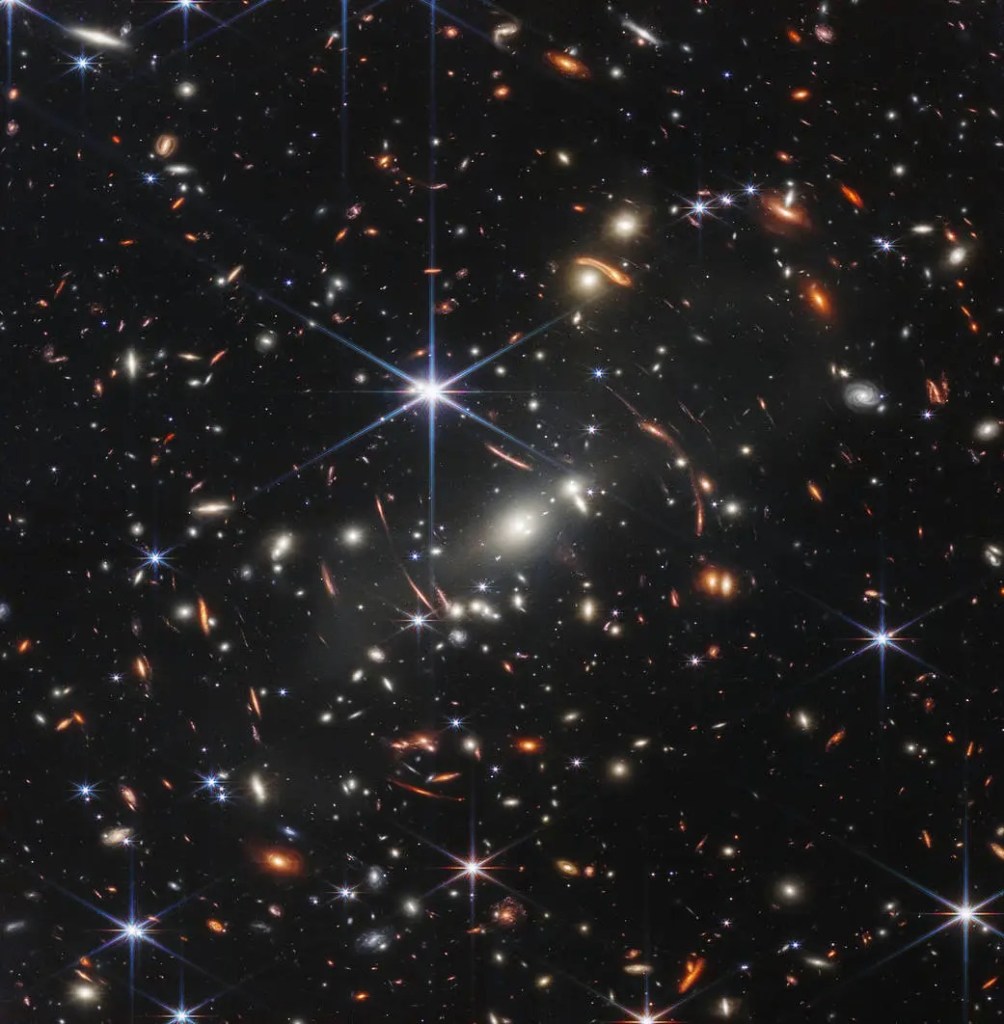
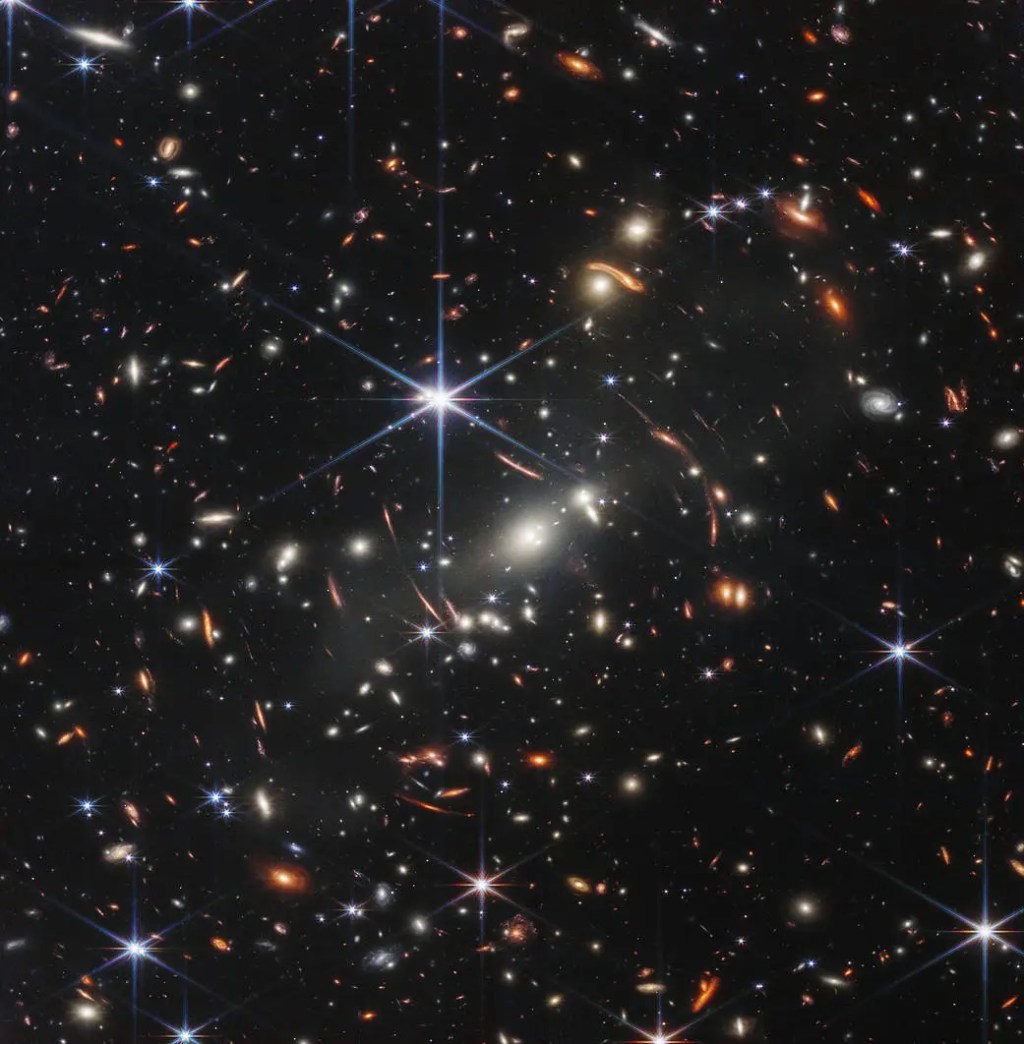
This is happening now, NASA’s James Webb Space Telescope records detailed data of the universe, but it is artists and creative technologists that interpret that data to give us the stunning images of space, those are not photos but digital art.
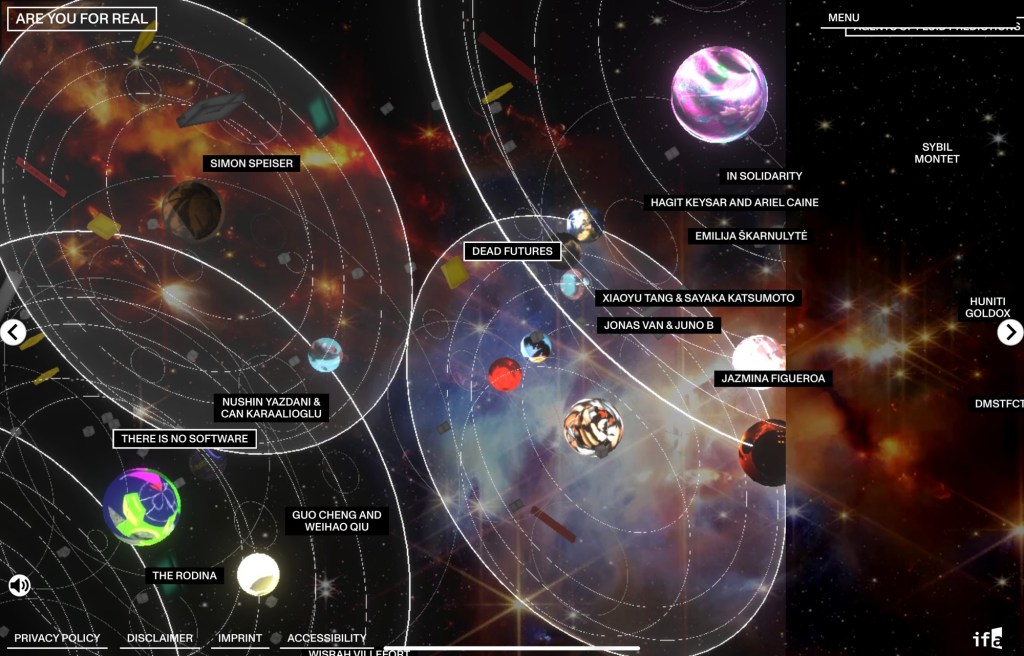
Ru4real phase 2, is digital solar art system explores NASA’s data concept in its background images and landing pages. Here, the projects Geomancers, have built worlds not merely fantastical escapes; they are art action research tools for interrogating pressing geopolitical, ecological, and technological realities. By modelling alternative systems, scenarios, and subjectivities, these spaces invite reflection on the conditions of the present and imagine different futures. For example, algorithmically-generated environments can lay bare the biases embedded in technological systems, while immersive simulations can make tangible the consequences of climate change or social inequality. In this way, the speculative becomes a mode of critique, and world-building becomes a form of proposal. Digital Geomancer’s engage collaboratively in the creation, modulation, and maintenance of this new horizon of creativity.This interplay of agencies reflects wider shifts within the art world, where rigid divisions of labour are giving way to more networked, participatory, and processual models of authorship.
Donna Haraway’s concept of Speculative fabulation (SF) offers an understanding of the ambitions and pitfalls of contemporary digital arts. SF is not simply fiction or fantasy; it is the practice of weaving stories and worlds that resist the closure of established narratives. Haraway’s fabulation is always situated, always entangled with the material, ecological, and geopolitical worlds from which it emerges. SF is about making kin, building alliances across species, technologies, and histories. Telling stories that refuse extractivist, colonial, or anthropocentric logics.
Ru4Real uses this new frontier of Digital Territories and Ethical Storytelling in the Harawayan sense. Its digital terrains are not passive backdrops, but living stories, transhumanist, and more-than-human. The platform’s geomancers and digital agents, from Sybil Montet’s geomantic rituals to Livia Rozsas’ speculative curation, perform fabulation as an act of world-making. Here, the digital is not a rehashed medium for display, but a site for contesting and reimagining the boundaries of possibility.
Haraway warned that every act of storytelling is fraught with the danger of extractivism, the risk of mining memories, cultures, and identities for content, spectacle, or profit. Digital participation itself can become a form of colonialism when it treats visitors’ experiences as raw material to be harvested. SF is not a license for escapism; it asks for ethical storytelling, where memories are honoured and co-creation is rooted in reciprocity, not extraction.
Expelling the white cube is happening, galleries struggle for audience and as living artist struggle for sales and a privilege elite offer only a spatial gesture. The white cube’s claim to neutrality masks its complicity in colonial histories of display and exclusion. New digital world-building, moves art beyond, to stay with the trouble and build worlds that are messy, contested, and alive. In building immersive, networked structures enable geomancers and more-than-human agents to co-fabulate new realities.
Ru4Real has attracted attention and is about to become hybrid in the gallery spaces of the Americas. This hybridisation has risk and will need careful negotiation, if hybrid digital-physical spaces simply reproduce old hierarchies or act as a sop to colonial logics, they betray their radical potential and will suffer the same fate as the white cube and sink into irrelevance. True fabulation means refusing easy synthesis; it means going down the rabbit hole into uncertainty, plurality, and the ongoing negotiation of meaning.
Resistance to Extractivism and using fabulation are ethical practices for resisting dead futures that Ru4Real explores in one of its ecosystems. Geomancy must nurture the potential rituals of nascent worlds and give agency to collaborative efforts that are generative rather than exploitative. Digital Arts participation is not a resource to be mined, but a practice of responsibilities across lines of difference. This speculative praxis asks, ‘What else could be possible?’ while remaining accountable to the worlds it helps conjure.
World-building is the new horizon for art, but it is also an ethical imperative, with attention to the ghosts and legacies of colonialism embedded in our technologies and stories. As we all become Geomancers shaping mutable, interdependent ecosystems, we need to refuse extractivist logic and embrace embodied immersion, systemic thinking, and speculative design of relational world-making. Art will then emerge as plural, contested, and alive.
Some terms in this writing you may want to know:
Ontological: comes from ontology, which is the philosophical study of being, existence, or what things are at the most basic level. When something is ontological, it questions what exists and the nature of existence.
Speculative fabulation (SF): Donna Haraway’s idea of design storytelling that blurs the lines between fact and fiction to explore potential realities and challenge dominant narratives. New worlds that stimulates alternative futures and ways of being, questioning current perspectives
Speculative orientation: as in imaginative, theoretical, or concerned with thinking about possibilities rather than just facts.
Geomancer: is a new world-builder, in this context a new word for the combined efforts of artist, creative technologist, curator, scientist and art visitor.
Extractivism: to take away something in an exploitative way.
Futurity: what could happen in the future, its multiple possibilities.
Some interesting digital art links, including a blog post with in-depth analysis of the tech I use.
https://zkm.de/en/beyond-matter-residency
https://mxdp.blog/2025/05/21/apps-programs-and-ai-review/.
Bibliography.
Anastasovitis, E. and Roumeliotis, M. (2024) ‘Enhanced and Combined Representations in Extended Reality through Creative Industries,’ Applied System Innovation, 7(4), p. 55. https://doi.org/10.3390/asi7040055.
Apps, Programs and AI review. (2025). https://mxdp.blog/2025/05/21/apps-programs-and-ai-review/.
Archibugi, D., a, Vitantonio Mariella, and Antonio Vezzani (2025) What next? Nations in the technological race through the 2030, Technological Forecasting & Social Change. journal-article, p. 123987. https://doi.org/10.1016/j.techfore.2025.123987.
ARE YOU FOR REAL (no date). https://ru4real.de/#nointro.
Babylon.js: Powerful, beautiful, simple, open – Web-Based 3D at its best (no date). https://www.babylonjs.com/.
Bérubé, M. (2024) The Ex-Human: Science Fiction and the Fate of Our Species. Columbia University Press.
‘CHAOS THEORY: a NEW PERSPECTIVE IN APPROACHING COMPLEX ACTIONABILITY, CULTURE, CIVILIZATION, AND CULTURAL DIVERSITY’ (2023) International Journal of Multiculturalism [Preprint]. https://doi.org/10.30546/2523-4331.2023.4.2.34.
Climate Change Resources Inc. (2024) Museums galleries and exhibitions | Climate change resources. https://climatechangeresources.org/resources/arts/museums-galleries-and-exhibitions/.
CTHEORY: There is No Software (no date). https://web.stanford.edu/class/history34q/readings/Kittler/There_is_No_Software.html.
Davis, H. and Turpin, E. (2015) Art in the Anthropocene: encounters among aesthetics, politics, environments and epistemologies. https://doi.org/10.26530/oapen_560010.
Discovery (no date). https://profiles.ucl.ac.uk/96778-l%C3%ADvia-nolascor%C3%B3zs%C3%A1s.
Fabbula TV (2016) Donna Haraway / Speculative Fabulation. https://www.youtube.com/watch?v=zFGXTQnJETg.
McArdle, R. (2021) ‘Intersectional climate urbanism: Towards the inclusion of marginalised voices,’ Geoforum, 126, pp. 302–305. https://doi.org/10.1016/j.geoforum.2021.08.005.
Mundus novus | John Carter Brown Library (no date). https://jcblibrary.org/collection/mundus-novus.
NASA’s Webb delivers deepest infrared image of universe yet – NASA (no date). https://www.nasa.gov/image-article/nasas-webb-delivers-deepest-infrared-image-of-universe-yet/.
Russell, L. (2020) Glitch Feminism : a manifesto. https://openlibrary.org/books/OL28676106M/Glitch_Feminism.
 Mx.D.P
Leave a comment