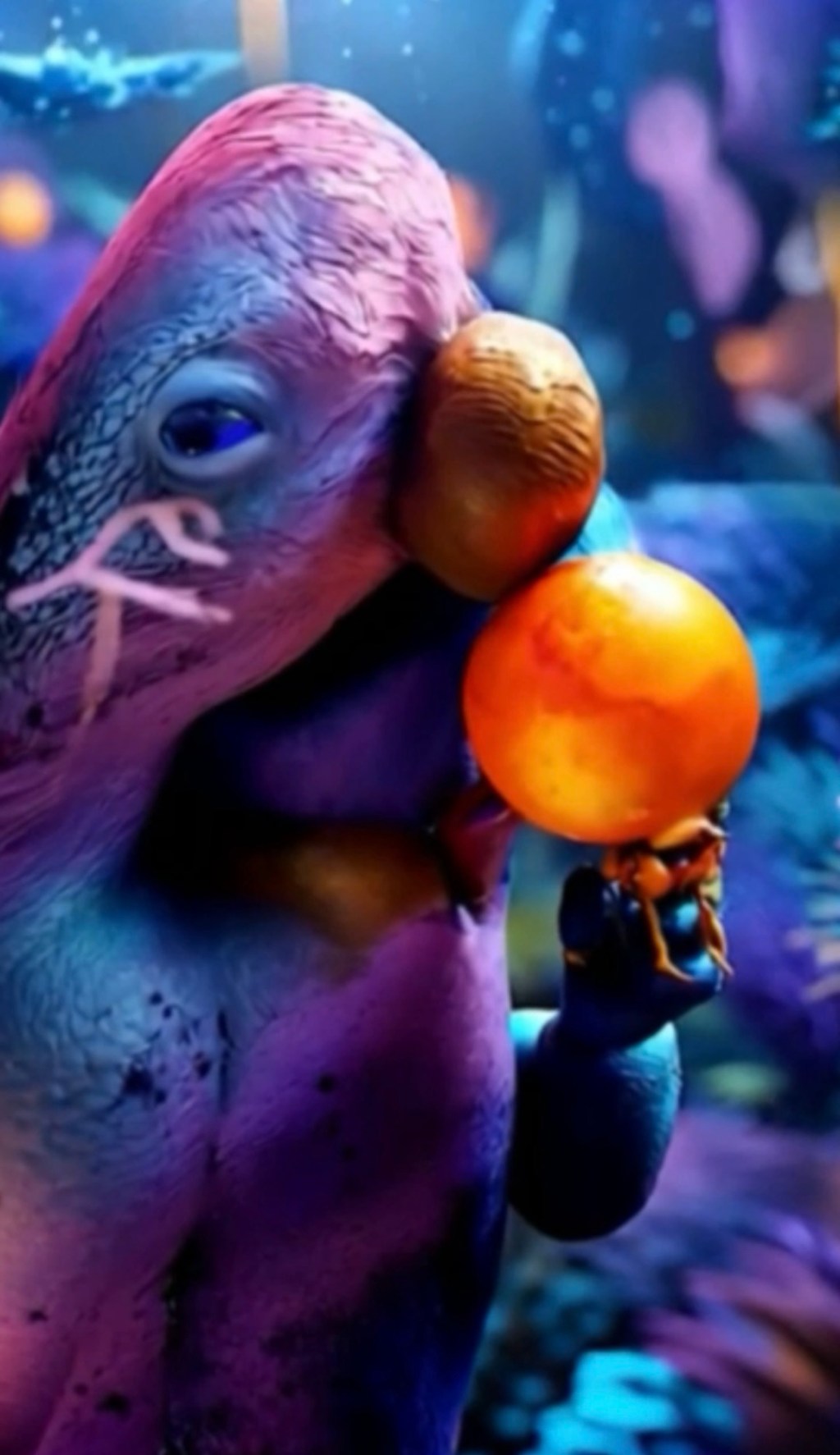
Bumbling in the Dark CC by Steven O’Brien.
Artificial Intelligence (AI) and Synthetic Intelligence (SI) is becoming the hot topic in academic and technological chat. Both create ‘intelligent’ systems, their philosophical underpinnings, methodological approaches, and ultimate objectives diverge.
The AI we know and love refers to the development of computational systems capable of performing tasks that mimic human cognitive abilities, such as language understanding, and decision-making in a perceptive ‘human way’. So much so the ‘new gens’ would rather talk to ChatGPT for mental health and relationship advice than a human counsellor… more human than human… That’s the focus of AI development, the simulation or replication of human intelligence through the use of rule-based algorithms, statistical machine learning, and models designed to emulate human cognitive processes. Its practical applications have immersed themselves into our daily lives, recommendation engines, voice-activated assistants, autonomous vehicles… The 2025 AI Index Report from Stanford University looks at how AI is now a mature, pervasive field, deeply integrated into sectors as varied as healthcare, finance, and education, and reliant on methodologies that seek to approximate or mimic human reasoning and behaviour.
SI is a different animal, its designers seek a move beyond imitation of human cognition. Their mission is the synthesis of intelligence as an autonomous phenomenon, not necessarily predicated on biological or human-like models. Rather than constructing systems that merely simulate human mental faculties, SI is being developed and enable to seek new autonomous forms of intelligence. These systems are being encouraged to exhibit adaptive, self-organising, and evolutionary capacities that are not restricted by the constraints of human cognition. The theoretical perspective here is that synthetic forms of intelligence might operate analogously to newly synthesised life forms, rather than as imitative humanity. Non-human, not-human interacting systems capable of learning, adapting, and evolving independently, potentially resulting in forms of intelligence that are inherently distinct from, and perhaps unrecognisable to, human observers. Steve Hargadon, sees this SI developing organically anyway in LLM’s. He talks about emergent synthetic intelligence (ESI) that is developing ‘organically from the computational complexity and language fluency of AI’. So our World State companion by design or by growth AI may be growing up.
A critical distinction therefore lies in the nature and source of intelligence that each field seeks to instantiate. AI is fundamentally anthropocentric, grounded in the aspiration to replicate or model human intelligence. On the other hand, SI is synthetic in both genesis and outcome: it is intelligence that is designed or even machine developed unconstrained by the necessity to mirror human thought or biological processes. This distinction is well-captured by analogy: just as synthetic diamonds are chemically identical to natural diamonds yet produced by artificial means, SI represents intelligence that is real and functional, but not derivative of human models. AI imitation or artifice, is being replaced by the creation of something new.
So are our SkyNet fears being realised? Has the reduction in AI Red Teams about to haut us? Well that’s probably another blog post. For me, an artist that’s practice is firmly immeshed in the rather Surreal but friendly face of AI, it is important to note the respective scopes of these concepts. AI is an established, wide-ranging discipline encompassing a vast array of techniques, from symbolic reasoning to deep learning, and has been the subject of extensive academic and commercial research for decades. Synthetic Intelligence, by contrast, is a nascent and more specific concept, emerging as both a philosophical and technological refinement of AI. In autistic computational engineering terms it may even be seen as a purer form of AI. SI is increasingly being discussed as a possible trajectory for the next generation of intelligent systems by human design or machine growth. Change always has the potential to become a Brave New World moment, and SI may be a huge departure from human cognition, both in structure and function, and whose synthesis represents a significant philosophical and technical departure from traditional AI… we will see if it is Huxley or Prospero in the driving seat!
Bhatt, S. (2024) ‘Digital Mental Health: Role of Artificial intelligence in Psychotherapy,’ Annals of Neurosciences[Preprint]. https://doi.org/10.1177/09727531231221612.
Huxley, A. (1932) Brave new world: A Novel. Musson Book Company.
Is an Emergent Synthetic Intelligence Already Here? (no date). https://www.stevehargadon.com/2025/04/is-emergent-synthetic-intelligence.html.
Shakespeare, W. (1734) The Tempest.
The 2025 AI Index Report | Stanford HAI (no date). https://hai.stanford.edu/ai-index/2025-ai-index-report.
Wang, Z. et al. (2025) A red teaming roadmap towards System-Level safety. https://arxiv.org/abs/2506.05376.
 Mx.D.P
Leave a comment