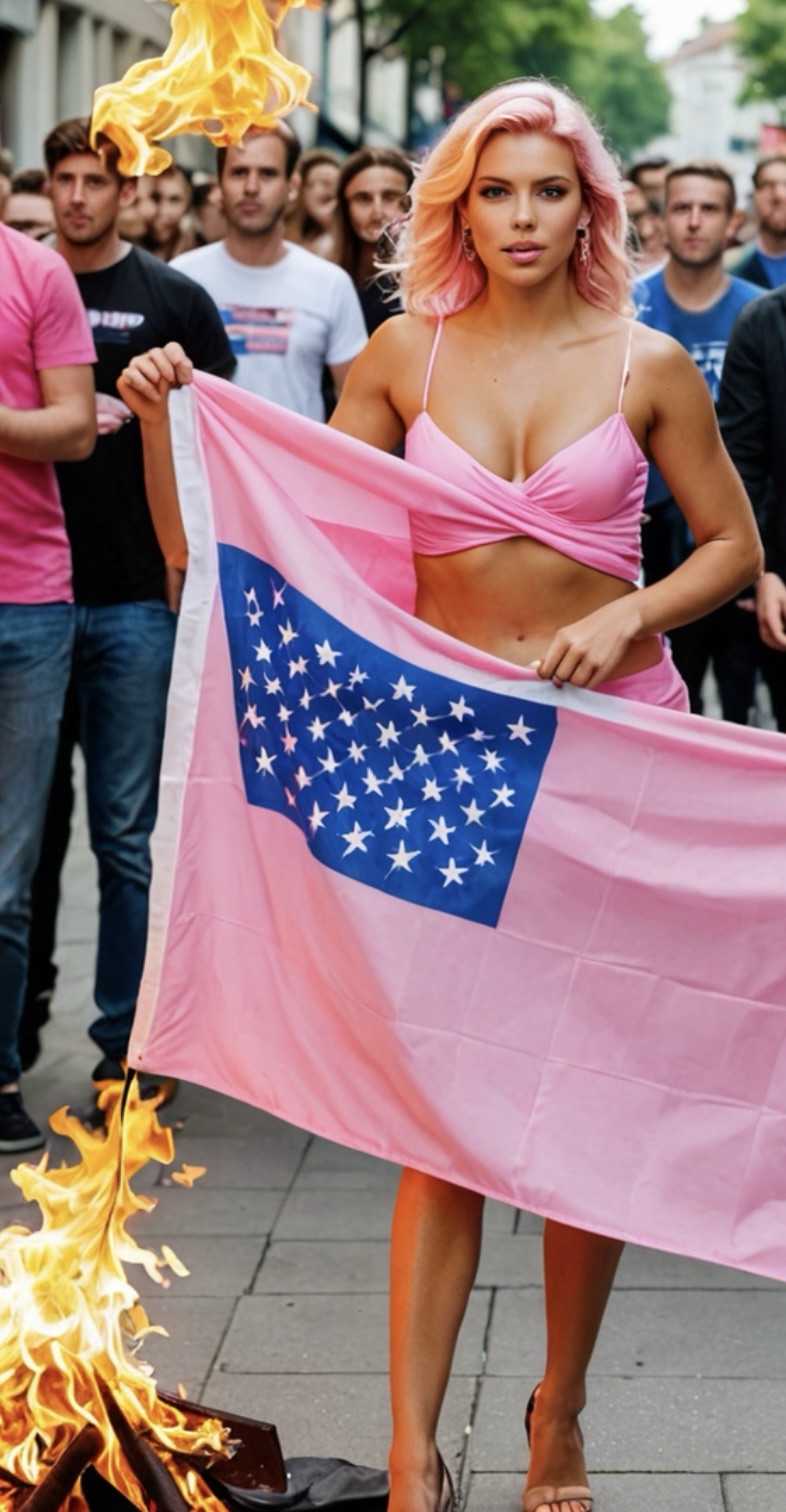
I always wondered what it would have been like to live in Germany during the first part of the 1930s. I lived in a hotel in Berlin for a few years until the Wall came down. I still have a bit of it in a plastic bag somewhere in the studio. Berlin changed before/during/after the Wall came down. The vibe was complex, but I still wondered what the 1930s were like…
The following are snippets written by a Cis gender straight married woman and mother.
The author is Patti Dign. Her day job is writing about global leadership, diversity, mindfulness and intentional living:
‘We have a family wedding in New York to attend later this month. Logic would tell us to fly. It’s faster. Less time off work. Fewer days away from the dogs and the routines that tether our lives to something manageable. We’re busy—like everyone is busy…
But we’re renting a car and driving. Thirteen hundred miles, give or take. Through red states and blue, past signs shouting for freedom and others quietly asking for dignity. We’re packing snacks and chargers and playlists. We’re taking turns behind the wheel.
We’re driving because our son is autistic. And transgender.
We’re driving because the list of things I’m afraid of is longer than it used to be.
Once, my fears were more domestic:
Would he make friends?
Would he be invited to birthday parties?
Would anyone come to his birthday party?
Would he be bullied in high school?
Would he always wear furry costumes to go outside?
Would I live through his outbursts?
Would we ever find a good therapist who understood both his neurodivergence and his gender identity, without forcing one to the sidelines in favor of the other?
But now? Now my fears wear heavier boots.
Will the TSA at the airport see a mismatch between his ID and his voice, his chest, his name, his gaze, and decide he’s a threat? Will he be on some registry that will “out” him as trans and cause them to disappear him at the TSA checkpoint?
Will some algorithm, some overzealous agent, some “random” search mistake his stillness for defiance, his quiet for danger?
Will someone think they’re doing the right thing by detaining him “just to be sure”?
Will they confiscate his ID because it doesn’t match the gender assigned at birth?
Will some policy, some petty cruelty disguised as protocol, turn an airport into a crucible?
I know how this sounds. I wish I didn’t.
I wish I were paranoid. But I read the news. I live in this country…
I cannot risk the moment a routine screening turns into something irreversible.
We had the conversation, of course. “It’s probably fine,” I told my husband, John, not believing it. “I’m sure it’ll be okay,” I said again, as if repetition could manufacture certainty.
But then I imagined my son standing in that fluorescent-lit checkpoint, backpack on, trying not to attract attention.
I imagined the questions.
The looks.
The way something ordinary can shift so quickly into something dangerous.
And then I knew: we’re driving.
It’s a decision that feels both cautious and defiant.
Cautious because I’m trying to keep him safe in a country I no longer trust.
Defiant because choosing the long way feels like a kind of refusal…
So we’ll take the back roads, if we have to. Stop at state parks. Eat sandwiches on picnic benches beneath trees older than the borders we’re crossing. We’ll listen to music, argue about where to eat, maybe talk about where we’re going—not just the wedding, but the wider “where”: as a family, as a nation, as people still trying to thread love through the eye of this needle.
My son is very funny, by the way. Deeply, dryly funny. And kind in a way that doesn’t announce itself.
He notices birds I’d miss.
He remembers things I say when I think he’s not listening.
He is working so hard to become himself in a world that keeps telling him he shouldn’t exist.
He and his older sister are the people I want most to protect. And the people who teach me, daily, what courage really is.
Sometimes I imagine the story he’ll tell one day. Will he say, “When I was young, we drove because it wasn’t safe for me to fly”? Will he say it with a laugh, like a family myth? Or will he say it with a shadow in his voice…“That’s the kind of country we lived in”?
What kind of country do we live in?
The one with bathroom bans and book bans?
Where lawmakers debate whether he deserves to play sports, receive healthcare, or simply exist in peace?
The one threatening to create autism registries?
The one with hundreds of anti-trans bills, and whispers of mental health “wellness camps” that echo with dangerous, eugenic parallels?
Or do we live in the other one—the quieter, stubbornly kind one—where strangers say, “Thank you for loving him just as he is.” Where a teacher keeps their door open during lunch, sanctuary from a cafeteria that is too loud. Even the one where an ancient man in a grocery store asks out of curiosity, “Are you a boy or a girl?” and my son answers—radiant, unrattled—“Yes.”
The truth is: we live in both worlds. All the time now.
This is America now. A country where we are expected to pledge allegiance while memorizing exits.
A place where we are expected to believe in freedom while mapping out escape routes. Where we pack bug-out bags in case it comes to that.
Where the question is no longer Do I trust my country with my child? but How far am I willing to go to protect him from it?
Because safety is no longer a guarantee but a choice—a daily, deliberate act.
“What kind of country did we live in?” I want to be able to answer, hand on heart, The kind where we didn’t let fear name us. The kind where we didn’t let fear define who we got to be. The kind where we chose each other. Every time.’
 Mx.D.P
Leave a comment