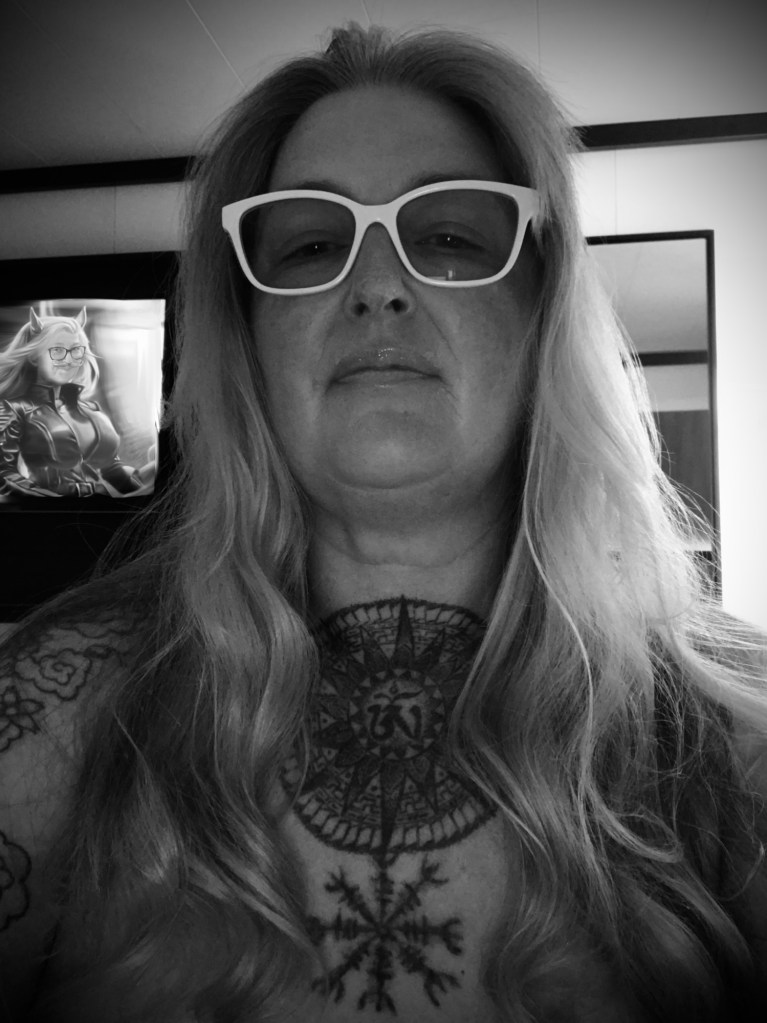
A Reflective Examination of Autoethnographic Practice and Networked Creativity: Abstracted Materiality as a Queered Conceptual Practice.
While collating the Unit 3 Assessment, I wondered why I intuitively chose to abstract materiality within my process practice?
Why did I conceptualise the prioritisation of ideas over traditional materiality?
In this blog post, I want to focus on the motivations and implications of my practice. How did an autoethnographic queer-crip discourse develop into the abstraction of materiality?
By looking at the concepts of queering, intersectionality, social justice, and resistance to commodification, I wanted to reflect on my development.
I remember clearly saying to a friend that I could never paint in an abstract style. Truthfully, I look at my physical work and don’t see abstract at all; I see conversation and inquiry.
I believe that abstracted materiality has enabled me to flexibly engage with my complex lived experiences and socio-political realities. It is a physical manifestation of network, community, connection, and resilience in an era of global crisis. For me, the role of digital and networked media as an emergent art material is seamlessly interconnected within my developing practice.
This evolution has conceptually challenged my traditional notions of art and its materiality. It shifted the focus from physical objects to the primacy of ideas and processes. While I was busy conceptualising and socially deploying my autoethnographic art practice, it subordinated or entirely dispensed with the physical artefact. This shift seemed natural to me.
I had thought it was about material resources and climate ecology, but that’s disingenuous, as I still have plenty of art materials to use up. So to undersatnd that switch, I decided to critically reflect on the reasons and consequences of that choice within contemporary artistic practices, especially those deeply embedded in queer identity and activism.
I needed to interrogate my autoethnographic art practice documented in my blog posts to understand this shift from physical making as a product, to process as an understanding. This took months of research, and I have only recently joined the dots. I had to stand back and see my practice at a distance and within a historical and contemporary context. It was strangely painful to do, but cathartic.
Conceptual art, and the primacy of idea over object, emerged prominently in the late twentieth century, redefined artistic value by elevating the notion of idea above the material product (Lippard, 1973). This reorientation destabilises the traditional art object’s role as a commodifiable and static entity, situating meaning within ephemeral actions, instructions, or social interactions (Krauss, 1999).
My work started to unconsciously embody this ethos, I described my practice as ‘THE NETWORK’ where ‘people are used as brushes’ and art manifests as ‘existential self-portraits’ articulated through interdisciplinary storytelling. I was trying to make sense of my medium. My practice became relational and performative rather than physical.
What is the motivation for Abstracting Materiality? Why did my art move beyond traditional boundaries? I thought of the abstraction of materiality as a liberation for me as an artist from the constraints of conventional media. It allowed me a more adaptive practice to explore contemporary socio-political complexities.
My departure from the idea of being a painter to employing digital platforms, social networks, and participatory workshops reflected a growing, deliberate strategy to engage with the contemporary urgent issues of climate chaos, identity politics, and systemic oppression. This aligns with Bishop’s (2012) view of socially engaged art as a form of relational aesthetics that privileges interaction over objecthood.
However, Lorenz (2014) says, ‘Radical queer politics requires us not only to propose images and living strategies for alternative sexualities and genders but also all kinds of economic, political, epistemological, and cultural experiments that seek to produce difference and equality at the same time.’ See! I’m Queer! I can’t help it!
By exploring my lived experience and its intersectionality with my practice focus through art, it automatically developed an autoethnographic practice, a rooted identity as a non-binary, queer, crip, thereby exhibiting its intersectionality as theorised by Crenshaw (1991). Traditional material forms for me began to represent such complex, embodied experiences inadequately. By abstracting materiality, I have unconsciously created a flexible platform to interrogate and express nuanced identities, power relations, and embodied knowledge, resonating with Haraway’s (1988) notion of situated knowledge.
I have also deployed ironic humour and blatant sexualised content, dressing up in provocative costumes. I thought that was to alleviate the mental torment of climate data, but according to Lorenz (2014), I was exploring ‘transtemporal and radical drag’. This ‘drag’ explored contradictory gender markers while engaging with the politics and rhythms of time and memory. I did this while fostering community and considering art’s social and environmental impacts. I had unwittingly subsumed my life experience into abstract materiality to facilitate the formation of networks and communities. It became a democratising language without cultural attachment, transforming art into a collective act.
I want the ‘network of kindness’ to exemplify how relational practices can mobilise social change and mutual support. This approach contests the isolation of art as an object and repositions art as a catalyst for activism and solidarity (Kester, 2004).
By eschewing tangible, marketable objects, I have resisted the commodification endemic to the ‘white cube’ gallery system and its institutional constraints (O’Doherty, 1999). However, I do fancy applying for the Saatchi art opportunity as it might help fund my PhD, I am such an art tart!
I loved developing grassroots art festivals, which rejected traditional art world gatekeeping. Abstracted materiality subverts the art market’s logic, privileging process, connection, and political engagement over commercial value.
Getsy (2016) says that Queer art practices produce work that ‘flouts’ common sense, makes the private public and political and brashly embraces disruption as a tactic… blimey I resemble those comments!
I have consciously used art to engage with uncertainty and as an adaptation strategy. My ‘brain scrubbing with art’ is a coping mechanism for the overwhelming realities of climate crisis and personal grief. Abstracting materiality allows for improvisation and emotional expression, providing me with remarkable resilience. I feel I have thoroughly flight-tested the use of art within mental health well-being; this aligns with contemporary understandings of art as a therapeutic and adaptive practice (Stuckey and Nobel, 2010).
I have consciously engaged with digital, social networking platforms, and emerging technologies, hoping they might help save the Earth from us. (I’ve been watching too much, I, Robot.) I have fully embraced digital and artificial intelligence as extensions of my practice; I see it as an ongoing evolution of materiality in art. Digital networks have become both medium and message, expanding the possibilities for connectivity and participation while challenging traditional boundaries between artist and audience as collaborators. These ideas have been developing in contemporary art practices for decades, yet are still not fully embraced. (Paul, 2015).
Travis Jeppesen says, ‘All abstraction is fundamentally queer, because queerness is an abstract state of being. (Magazine, 2021).
For me, the abstraction of materiality became a sophisticated negotiation and unconscious queering of identity, politics, and practice. It challenges fixed categories of art and material, and looks to a broader cultural shift towards hybridity, fluidity, and decentralisation of creativity. My practice expands the capacity of abstracted materiality to articulate complex lived realities, foster collective action, and resist institutional commodification. Simultaneously, negotiates sustaining community engagement and the development of a democratising global language. As the network evolves, I hope it may offer a new understanding for contemporary conceptual art that can be engaging, adaptive, and socially transformative.
In short… once I started the MA and its inevitable self-reflection, the outcome was undeniable and unstoppable.
Right I am off to brain scrub…
References
Bishop, C. (2012) Artificial Hells: Participatory Art and the Politics of Spectatorship. London: Verso.
Crenshaw, K. (1991) ‘Mapping the Margins: Intersectionality, Identity Politics, and Violence against Women of Color’, Stanford Law Review, 43(6), pp. 1241–1299.
Getsy, D.J. (2016) Queer.
Haraway, D. (1988) ‘Situated Knowledges: The Science Question in Feminism and the Privilege of Partial Perspective’, Feminist Studies, 14(3), pp. 575–599.
Kester, G. H. (2004) Conversation Pieces: Community and Communication in Modern Art. Berkeley: University of California Press.
Krauss, R. (1999) Conceptual Art: A Critical Anthology. Cambridge, MA: MIT Press.
Lippard, L. (1973) Six Years: The Dematerialization of the Art Object from 1966 to 1972. Berkeley: University of California Press.
Lorenz, R. (2014) Queer art: A Freak Theory. transcript Verlag.
Magazine, M. (2021) ‘Queer Abstraction (Or How to Be a Pervert with No Body). Some Notes Toward a Probability — Mousse,’ Mousse Magazine and Publishing, 27 August. https://www.moussemagazine.it/magazine/queer-abstraction-travis-jeppesen-2019.
O’Doherty, B. (1999) Inside the White Cube: The Ideology of the Gallery Space. Berkeley: University of California Press.
Paul, C. (2015) Digital Art. London: Thames & Hudson.
Stuckey, H. L. and Nobel, J. (2010) ‘The Connection Between Art, Healing, and Public Health: A Review of Current Literature’, American Journal of Public Health, 100(2), pp. 254–263.
 Mx.D.P
Leave a reply to Why can’t the world be more Queer? – Mx. D.P. Cancel reply